
Words by Teresa Berg
Research by Anna Edwards, Fernando Mattos and Fran Linnane
What happens when you ask thousands of people about men’s health?
You uncover a truth many of us sense but rarely say aloud: men often say they are fine, even when they are not.
Catalyst by Wellstar’s 2025 men’s health survey, informed by responses from more than a thousand Catalyst Voice participants, revealed a pattern that is both familiar and urgent. Men report good health, attend annual checkups, and trust their providers. Yet nearly half quietly struggle with stress, anxiety, or emotional strain that affects daily life. At the same time, women often shoulder the unseen work of helping men navigate care.
Together, these insights point to a clear reality: improving men’s health starts with addressing the cultural beliefs, emotional barriers, and system friction that keep men from engaging early.
Men rate their health as strong, but emotional strain tells a different story
On the surface, men feel confident about their health.
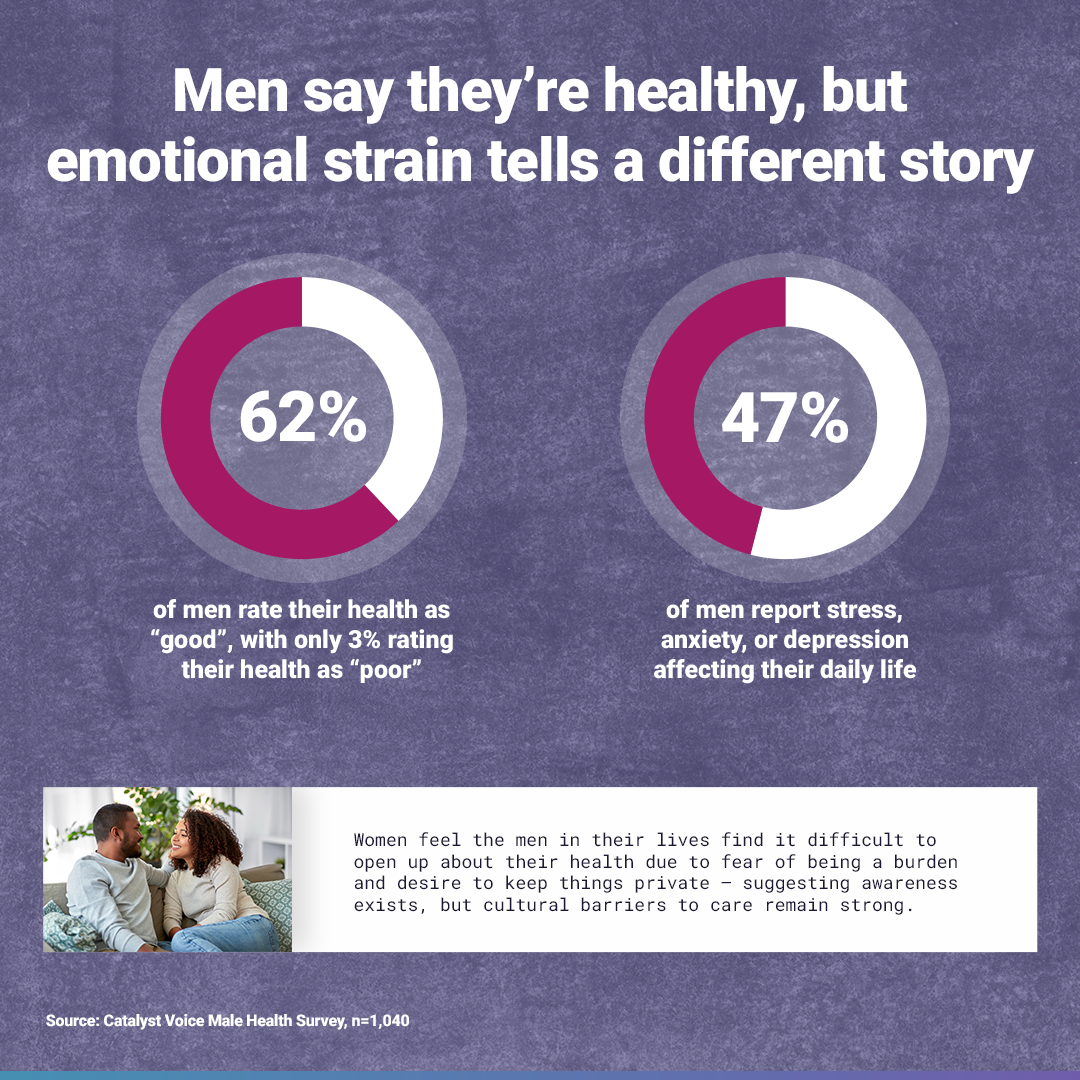
Sixty-two percent of men responding to the Catalyst Voice survey describe their health as good, and only 3 percent rate it as poor. Nearly all report having a primary care provider and attending annual exams.
Yet 47 percent of male respondents say they experience stress, anxiety, or depression that affects daily life. Most report feeling comfortable discussing mental health with a clinician, particularly when the clinician initiates the conversation.
One Catalyst Voice survey respondent shared,
“The exposure to high levels of stress for a long period of time created some health issues.”
These responses suggest that men are not resistant to support. Many simply do not know where to begin.


Feeling fine is not a strategy
Men delay care for predictable reasons.
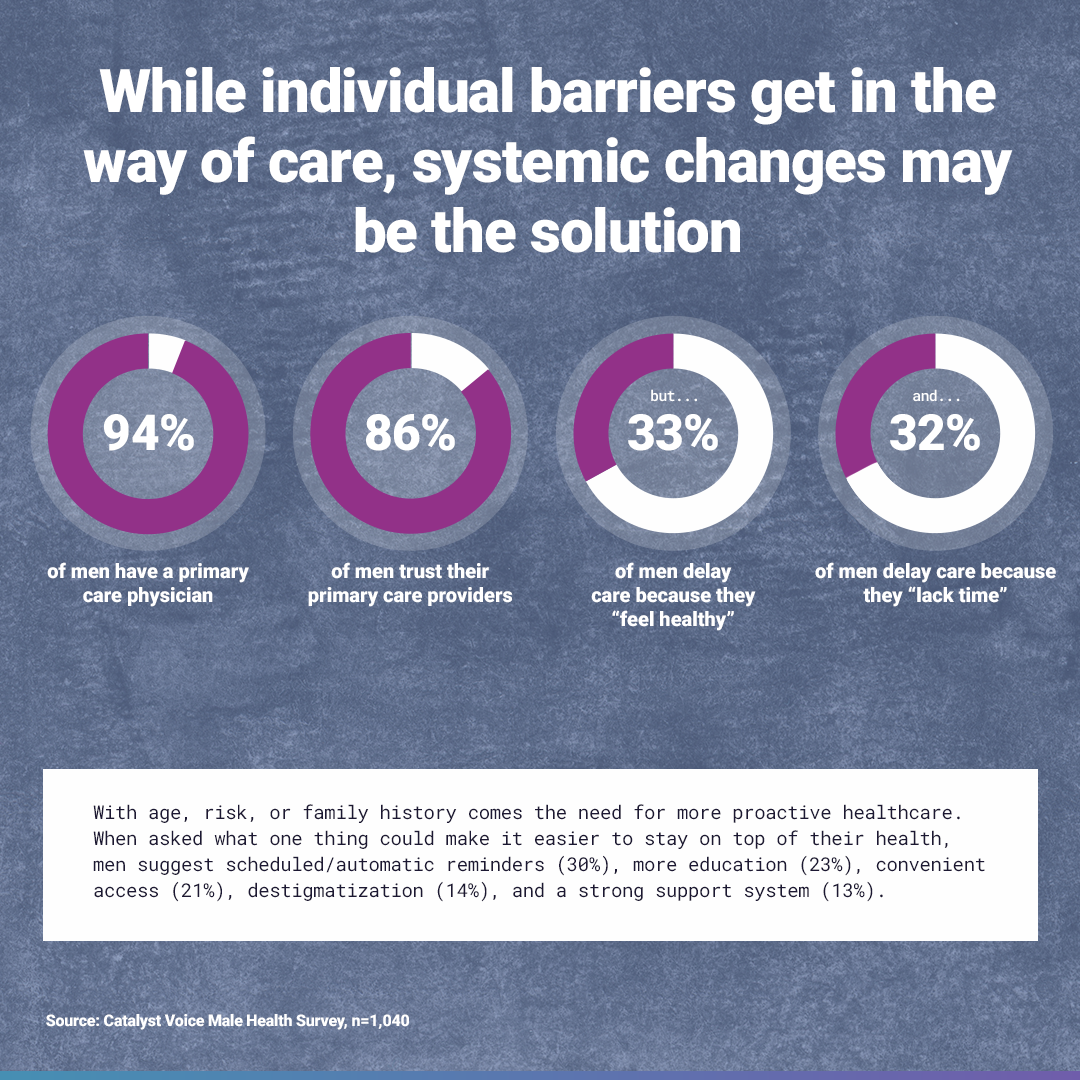
Thirty-five percent of survey respondents say they avoid appointments because they feel healthy, while another 25 percent report being too busy. Others cite fear of bad news or embarrassment discussing personal concerns.
As one female respondent reflected in the survey,
“If you ignore symptoms, it will affect every area of your life and could become serious. The earlier you are seen, the more options you have.”
A male respondent echoed this reality in hindsight:
“Had I found a new provider sooner, I likely would not have experienced the health issues I did last year.”
Prevention depends on action long before symptoms appear, yet many men rely on how they feel in the moment to guide healthcare decisions.
Women are a driving force behind men’s healthcare
Responses from both men and women participating in the Catalyst Voice survey revealed how frequently women act as informal care navigators for the men in their lives.
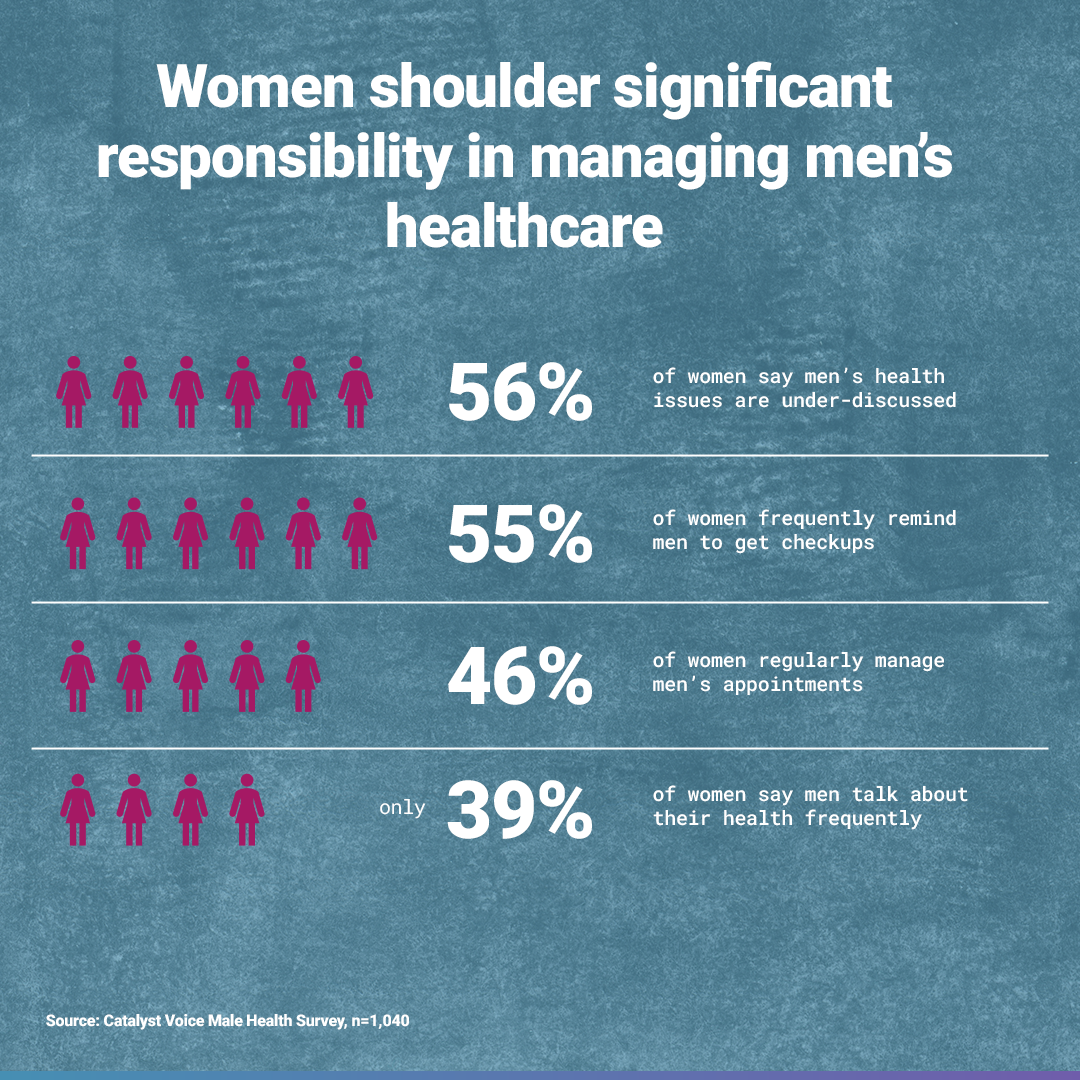
The survey found that 43 percent of women regularly help manage a man’s healthcare, and 55 percent say they remind men to schedule checkups. Women also identified emotional barriers that men often keep to themselves, including pride, fear, and discomfort with the healthcare system.
One female survey participant shared,
“My husband is alive and well because of my knowledge and advocacy. Single men, or those without support, are most at risk of delaying important screenings.”
These insights highlight how much caregiving happens outside clinical settings — and how vulnerable men without support networks may be.
Masculinity and cultural beliefs shape behavior
A common theme across Catalyst Voice responses is the belief that men should appear strong, self-sufficient, or invincible. In fact, the most frequently cited misconception identified by survey respondents was simple and revealing:
“Men are invincible.”
This belief can prevent men from acknowledging pain, emotional strain, or the need for help.
As one male respondent put it,
“Men need more safe spaces to speak on our concerns. We often hold everything in because we feel we are on our own.”
A female respondent reinforced the importance of addressing stigma directly:
“There is no shame in taking care of yourself. You are important in every single way. Staying on top of your health matters.”
Men want to improve their health, but need clearer support
Men responding to the survey were clear about where they struggle most. Many expressed regrets related to fitness, weight, and substance use, and identified weight management and exercise as their top health goals.
Women respondents additionally pointed to the role employers and healthcare systems can play in making care more accessible.
They also clearly articulated what would help them engage more consistently in care:
As one survey participant noted,
“Mental health needs to be prioritized more in the workplace. Male-dominated fields often do not provide the support men need, even in high-stress jobs.”
Why this matters for everyone
Men’s health affects families, workplaces, and communities. Delayed care does not only impact individuals — it shapes outcomes across generations.
One female respondent captured this broader impact:
“The life expectancy for Black men is decreasing rapidly. When men delay care, families and communities lose leadership. The impact reaches future generations.”
Another male respondent reflected on the importance of support:
“We all need mental health support at some point. Accepting that support is not weakness.”
Improving men’s health is not about asking men to try harder. It is about creating systems and cultures that make it easier to speak up, seek care, and feel understood.
These insights, drawn directly from Catalyst Voice respondents, reinforce a simple truth: men want to be healthier. When they are supported early and consistently, families and communities thrive alongside them.