
Getting a pilot is exciting.
I know personally how much goes into reaching that moment. Earlier in my career, I was a founder myself, and can recall vividly that excitement of being on the right track.
But I always like to remind founders of one thing: the pilot is not the finish line. It’s the starting point.
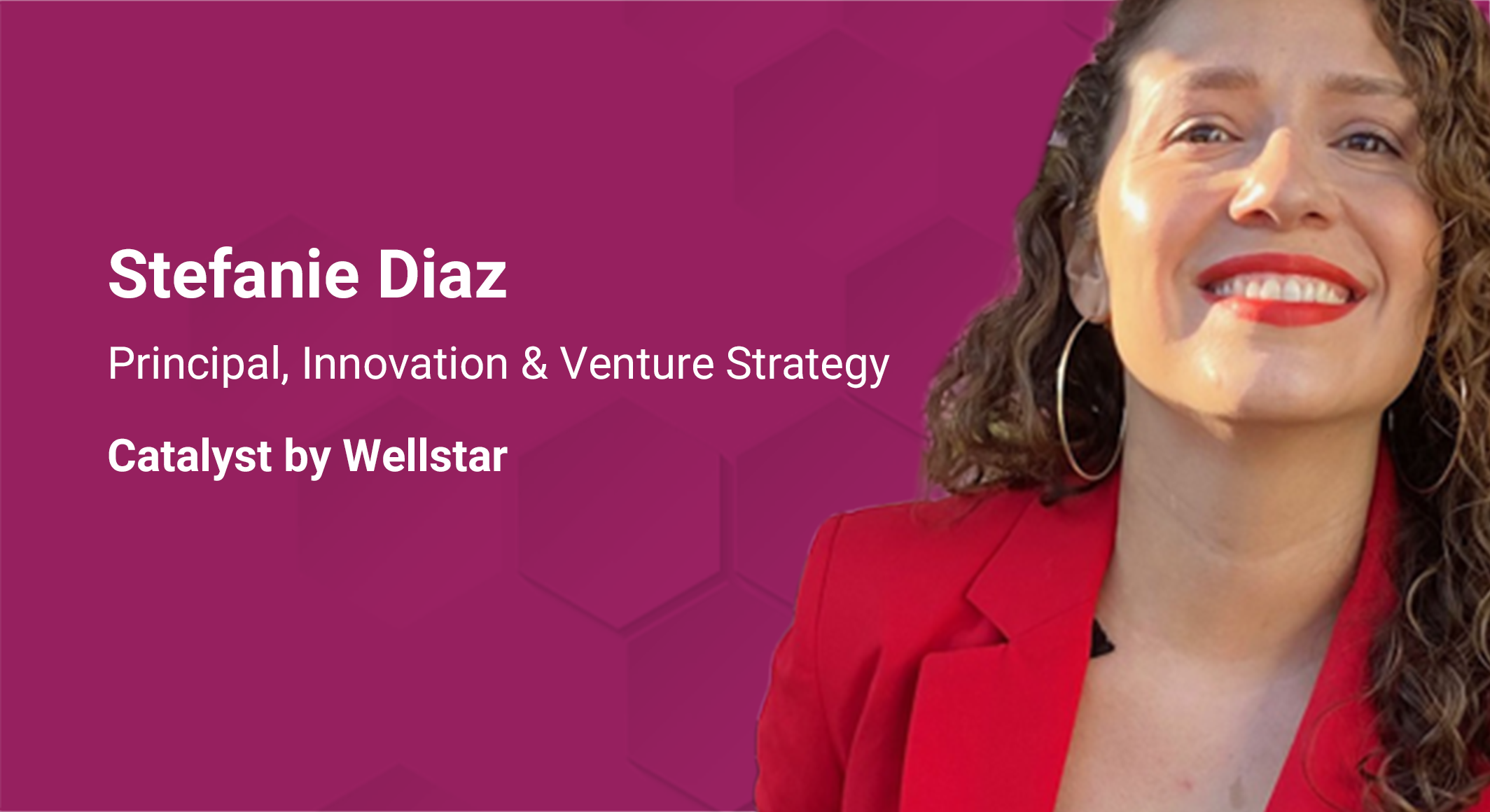
At Catalyst by Wellstar, we sit at the intersection of startups and a health system that serves nearly 2 million Georgians. Today, as Principal of Innovation and Venture Strategy, my role is to bridge those two worlds, knowing that both sides are navigating challenges, just in different ways.
When I’m first meeting a founder, one of the biggest signals I look for is how they talk about value, and whether they understand how success is measured across an organization.
In healthcare, that means thinking across multiple stakeholders:
As a founder you’ll meet all these people, who have different ways of thinking about the same problem, on your way to a pilot. If you can speak to all of those perspectives and answer questions clearly, you’re already ahead.
This is one of the most important mindset shifts.
A pilot is an opportunity to test, not proof that you’ve reached product-market fit.
During that phase, we’re looking at:
For me, true success looks like moving your solution into a budget line and scaling across the organization.
That’s when you know you’ve really made it.
One of the founders that comes to mind for me is Kaitlin Christine, Gabbi’s founder. Kaitlin lost her mother to breast cancer, despite her doing annual mammograms. At 24, Kaitlin was diagnosed with breast cancer herself.
These two experiences led her to create Gabbi, a startup that uses machine learning to determine which patients need additional screenings, imaging or genetic counseling, regardless of their age.
We invested in Gabbi a couple of years ago, and one element that stood out since our very first conversation is how the founder consistently points back to her “why” in every interaction.
No matter who is in the room, she never assumes people understand the mission.
She takes the time to explain why she started the company, the problem she’s solving, and why it matters. That clarity is inspiring and creates alignment.
In large organizations, where new stakeholders are constantly entering the picture, that matters more than people realize.
As a founder, you’re building belief in every room you enter. And every conversation is an opportunity to create a new champion.
Enterprise adoption doesn’t happen in isolation.
You need champions, people who are advocating for you internally. And you need visibility with the decision-makers who ultimately control budgets and scaling decisions.
One of the most important things you can do as a founder is make sure that visibility happens early. Often, the person who approves a pilot is not the same person who approves long-term adoption.
There are multiple stakeholders and moments where progress slows for reasons outside your control.
What I pay attention to is how founders respond in those moments.
The strongest partners are the ones who communicate openly and who are willing to problem-solve alongside us. That mindset goes a long way.
The journey from pilot to enterprise is not linear. Yes, we have said the same thing at our SXSW panel “From Pitch to Pilot” and our other blogs. But it’s true.
New tech is cool (and we love it here at Catalyst). But the startups that succeed are aligning teams and creating the conditions for long-term adoption. They know that the goal isn’t just to launch a pilot. It’s to build a partnership that lasts.
And in healthcare, to build something that will ultimately improve and save lives in Georgia and beyond.